
Bare slab before a new coating
This suits a garage, basement or shop floor that's never been coated. We grind it to the profile your coating calls for, so a thin coating isn't fighting a rough surface and a thick one has enough to bite into.
Coating peeling, old glue stuck to the slab, or a new floor on the way? We grind the concrete so the next layer holds.
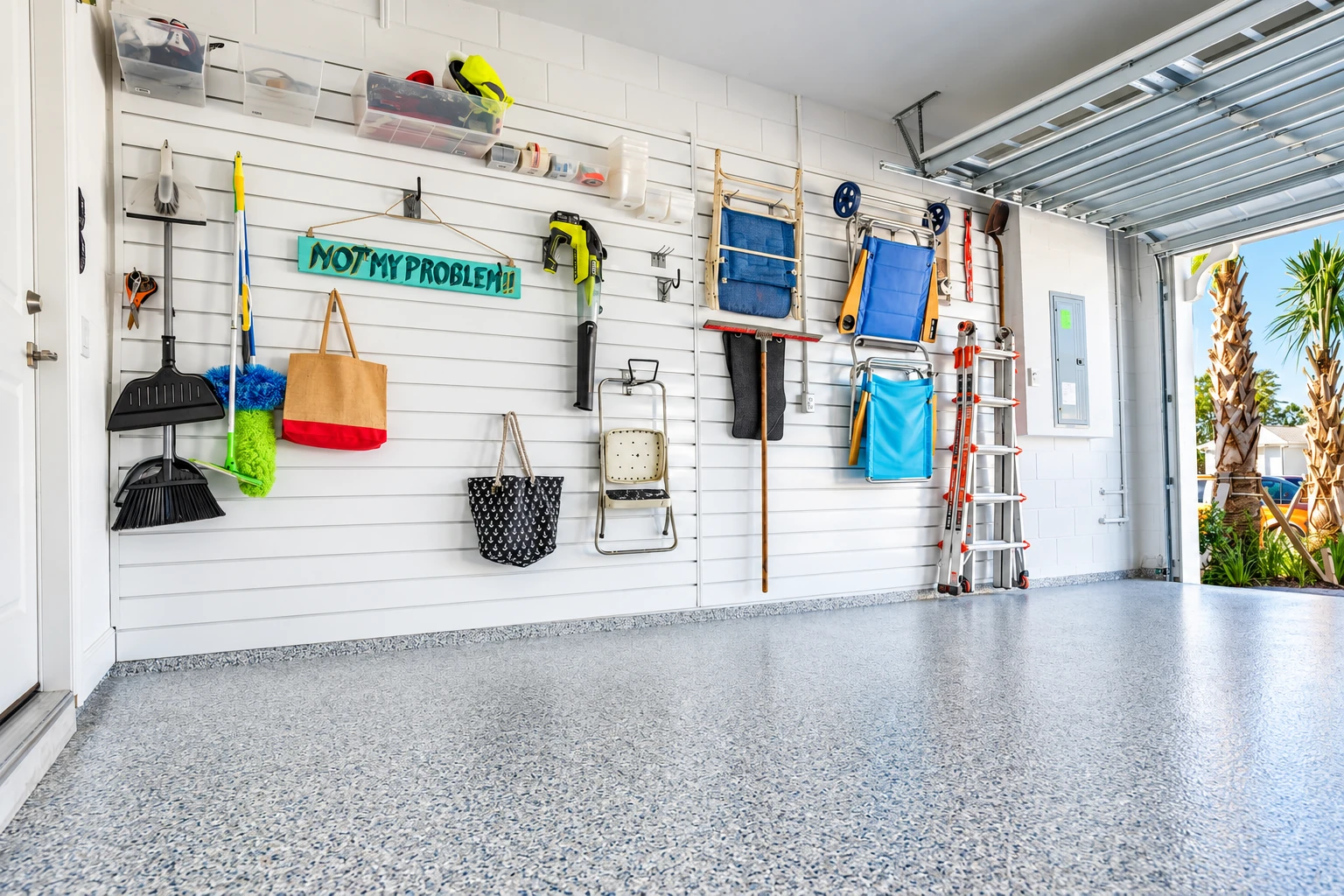
Concrete grinding and surface preparation in Concord roughens your existing slab, usually with a grinder, so a coating, sealer or topping has clean, open concrete to grip instead of a smooth or dirty surface it can peel off.
Most people call us because a coating is peeling, old tile came up and left glue behind, or they're planning an epoxy floor coating and want it done right the first time. Most failed floors I've looked at went wrong underneath, so prep is where I'd rather spend the time. The price moves with the size of the floor, what's stuck to it now and how rough your coating needs the concrete to be. The schedule turns on what the slab shows when it's tested and whether old glue has to be checked before anyone grinds it. I'll look at the floor in person and give you a written estimate with the reasons behind it.
I come out to every job myself, look at what's on the slab and how it's holding up, and write the estimate. When the work is scheduled, I'm on site with our crew, so the person who sized up your floor is the one prepping it.
I spent summers on flooring and concrete crews all through school, grinding slabs and mixing coatings, and started this business in Concord in 2023. What hooked me was figuring out why some floors held up and others peeled, and most of the time the answer was underneath.
We're licensed and insured. That matters on prep work, because grinding and blasting bring heavy machines, cords and a crew into your garage or basement, and you should know the business doing the work stands behind the people doing it.
Your written estimate explains the method and the coating we'd prep for, and if a lighter grind or a smaller fix will do, I'll tell you. Your satisfaction, guaranteed. Call (925) 536-0504 or send us the form to set up a visit.
We reply within one business day, and the estimate is free, on site and comes with no pressure to book. I'll come look at the floor, check what's on it and how it's holding up, then give you a written estimate with the reasons behind it. If you know the square footage, the coating you're planning and whether old tile, glue or coating is still down, mention it in the form.
The Concord rules I can point you to are about outside concrete. The city requires an encroachment permit for sidewalk repairs, and its engineering staff charge no permit or fees for driveways inside your property. Neither one settles whether prepping an indoor floor needs a permit, so before we schedule, we check with the city or county office that covers your address, and if a permit is needed we take care of the application and plan the job around it. You can also use Concord's permit center page to see which permits a project needs and estimate the fees. If your trouble is a raised edge between sidewalk slabs out front, the city lets owners have it sliced instead of torn out and replaced, and its sidewalk repair guide says slicing is ADA compliant but only works on certain problems up to 2 inches.
Around Concord, a lot of the floors we prep are garages and basements in older houses, where a past owner often left a worn coating, paint or tile glue on the slab. We see the same in Walnut Creek and Pleasant Hill, out toward Antioch and over to Vallejo, so the first visit is mostly about finding out what's already on the concrete.
Across the US, concrete grinding usually costs about $1.50 to $3.50 per square foot, from light smoothing up to taking off glue or mastic. That's the general market range, not our price. Where your floor lands depends on what's stuck to it and how rough your coating needs it, and your written estimate gives you the figure for your slab.
Moisture coming up through the slab is the top cause of failure in resin floor coatings like epoxy. The test for it belongs before prep, not after the coating starts to bubble. If you're planning a resin coating, ask for the moisture test before grinding is booked, because the result can change the plan.
The coating you plan makes the choice. Grinding leaves a smoother surface that suits thin coatings and edges, while shot blasting leaves a more open surface for thick, high-build coatings. Neither suits every floor, and many jobs use both.
Grinding, for most floors. One coating maker's guide calls mechanical roughening the safest method and the first choice, though acid etching can work for some coatings. Acid is hard to rinse and neutralize fully, needs good airflow and leaves oil and grease soaked into the concrete, which is why we grind or blast instead.
Sometimes it can stay. A sound coating that's compatible with the new one can be roughened and recoated, but one that's failing, incompatible or of unknown makeup should come off. Either way, a test patch should confirm the new coating sticks before the whole floor gets done.
It could. The Bay Area Air District lists mastic, the glue under old tile, along with vinyl floor tiles among building materials that might contain asbestos. If a renovation removes 100 sq. ft. or more of asbestos, the Air District has to be notified at least 10 business days ahead, or 72 hours ahead with an added fee for homes of four or fewer units, which is why I look at old glue before grinding is scheduled.