
A coating bonded to the concrete
This suits a basement used for storage, a home gym, laundry or a workshop, where you want a hard floor you can mop. We grind the slab and coat it once the moisture test tells us the slab is ready for a coating.
Basement floor peeling, lifting or coming loose? We find out what the slab is doing first, then put down a floor it can carry.
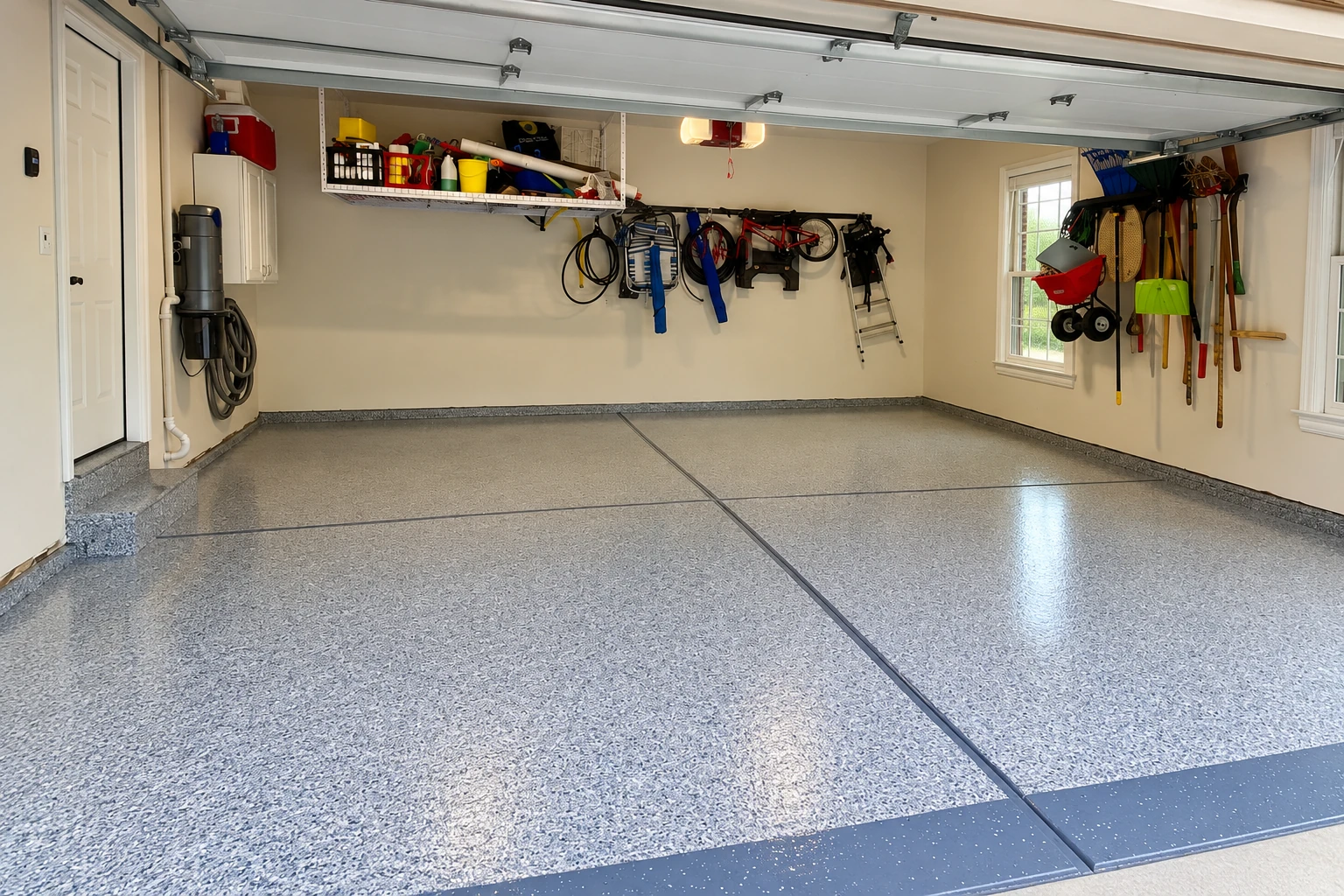
Basement flooring in Concord, CA starts with the concrete slab under the room. We test it and prepare it, then put down the floor that suits it, whether that's a coating, tile, carpet or wood. Doing it in that order gives you a floor that stays put over the slab, not one that starts lifting a year later.
Most people call me when a basement floor is peeling or coming up at the seams, or when they're finishing the space and don't want the new floor to go the same way. The price turns mostly on the size of the room, what has to come up first, how much work the slab needs and which floor you pick. The schedule depends on how long the heat and air need to run before we test, and on what that test shows. I'll give you a written estimate with your own figure and the reasons behind it.
I come out to every job, look at the floor and write the estimate myself, with the reasons behind the floor I'm recommending. When the work starts I'm on site with our crew, so the person who looked at your slab is the one making the calls on it.
I started this business in 2023 after working summers on flooring and concrete crews, grinding slabs and mixing coatings. Most failed floors I've looked at went wrong because of what was under them, so we'd rather take the time to find out what your slab is doing than guess.
California licenses flooring contractors for this kind of work, from preparing the surface to putting down carpet, resilient tile, wood and other floors. We're licensed and insured. We also stand behind the work with one simple promise. Your satisfaction, guaranteed.
Call (925) 536-0504 or send the form, and we'll reply within one business day to set a time. I'll come out, look at the floor and what's on it, and give you a free written estimate with the reasons behind it, with no pressure to book. It helps to have the room size, the current floor and anything you've noticed, like glue oozing at the seams or loose tiles, ready when we talk.
In Concord, the city's Building Division says every new installation on its permit list needs a permit. The list isn't complete, so the city asks you to call if your work isn't on it, and its Project Pal tool shows which permits a project requires and estimates the fees. We don't guess on this. Before we schedule, we check with the city or county office that covers your address, and if the job needs a permit, we take care of the application and plan the work around it. One more thing worth knowing is that in California, someone without a license can only take on work under $1,000, and only when the job needs no permit and they have nobody working for them.
We're based in Concord and work in the cities around it, from Walnut Creek and Pleasant Hill out to Antioch and over to Vallejo, and if your city isn't listed, just ask. A lot of what we see here are older finished basements and lower-level rooms where a floor went down without anyone testing the slab first.
The usual cause is too much moisture in the slab, because water vapor gets trapped under a floor that lets none of it through. That vapor can condense and make the floor cup, buckle and blister, which leads to glue failure and mold. Watch for glue oozing at the joints, black lines around tiles and tiles coming loose. It's also worth asking whether your slab has a vapor barrier, a layer that blocks water vapor, since moisture moves up from below the slab either way.
You test it before the new floor goes in, and the common ways are a calcium chloride test or a humidity probe set inside the slab. Checking moisture matters for any slab. For wood floors, the wood flooring trade group treats testing as required no matter the conditions, so ask any contractor you're talking to how they'll test.
Yes, solid and engineered wood can go over concrete when the slab is properly prepared for it. The wood flooring trade group's guidelines say the slab has to be moisture tested and moisture control should be in place. They also say wood should only go over a slab with no known moisture problem, so choosing wood adds prep work. If you already know the basement takes on water, we'd deal with that before we talk about wood.
New flooring installation in San Francisco usually costs about $2,700 to $8,200 per project. That range covers flooring in general there, not basements in particular and not our price. For a Concord basement, what moves your number most is how much the slab needs before the new floor goes in, and the written estimate gives you your own figure with the reasons behind it.
The slab is tested only after the basement's heating and cooling are running and the slab has settled into normal indoor conditions, so the heat and air come on first. For wood, the trade group says the heating and cooling should run at least 5 days before the flooring is delivered, and longer in wet conditions, which can push back the install date. We build the schedule around that wait so nothing goes down early.